





Is the 2026 Jeep Wrangler or 2026 Ford Bronco better for tight trails and water crossings around Simpsonville, SC?
Big O Jeep – Is the 2026 Jeep Wrangler or 2026 Ford Bronco better for tight trails and water crossings around Simpsonville, SC?
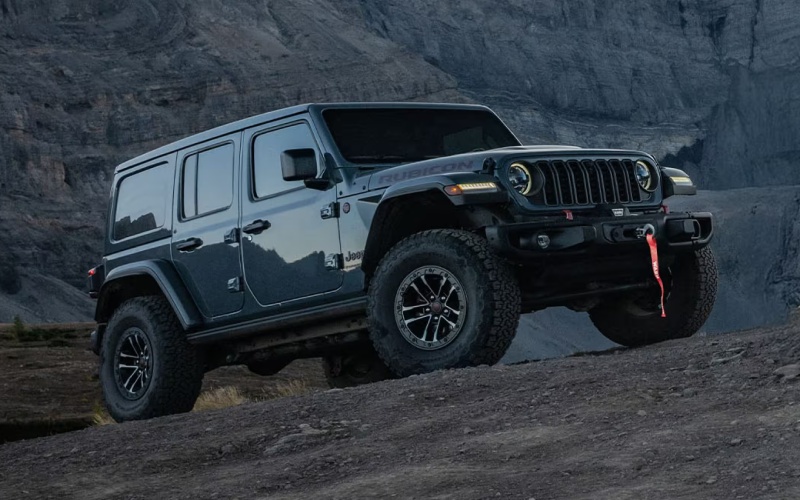
When shoppers ask which SUV feels more composed on tight, technical trails and shallow water crossings around Simpsonville, SC, we focus on real-world control tools and geometry. Wrangler and Bronco® both deliver serious talent, but the way they go about it differs. Wrangler leans into traditional, trail-proven hardware—solid front and rear axles, available Rock-Trac® 4×4 with a 4:1 low range, and that outstanding 100:1 crawl ratio when paired with the manual transmission and available 4.88:1 axle ratio. Bronco counters with G.O.A.T. Modes® and HOSS suspension systems tuned for mixed surfaces and speed, plus available Trail Turn Assist for tight switchbacks. Both machines can wear 35-inch tires from the factory and both give you removable doors and roof panels. That means the conversation becomes less about “can it?” and more about “how does it feel when it does?”
In dense parkland two-tracks and rutted, rooty corridors common to Upstate South Carolina, steady throttle modulation at a walking pace often decides how confident you feel. Wrangler’s crawl ratio advantage and electronic sway bar disconnect on Rubicon models help the tires stay in contact and move gently over stepped obstacles, while Tru-Lok® front and rear electronic locking differentials add traction when soil turns silt-like after a shower. Bronco’s Trail Control and Terrain Management System dial in response quickly, especially for drivers who prefer to set it and go, but Wrangler’s tactile, mechanical approach keeps inputs and outcomes closely linked, which many enthusiasts appreciate in low-range maneuvers. If you’re frequently threading between trees with ditch cutouts on either side, the Wrangler’s approach angle of up to 47.4 degrees (4-door, available) becomes more than a number—it’s a margin of error you can feel.
Water crossings deserve special attention. Depth, current, and the riverbed’s firmness all matter. Wrangler’s Trail Rated® badge isn’t just for show; it reflects stringent testing that includes Water Fording, supported by high-mounted air intakes and protective sealing in critical areas. Bronco touts impressive fording (up to 37 inches in optimal scenarios), and both SUVs stress responsible, warranty-aware water use. The takeaway: evaluate each crossing with care, know your owner’s manual guidance, and use a spotter when needed. On the tech front, Wrangler’s front radar placement above the rearview mirror is a subtle but smart touch when you equip a winch or high-clearance bumper—keeping sensors out of the line of trail accessories. It’s one of those small differences that pays off in the real world.
Open-air access can also shape how you use your SUV day-to-day. Wrangler’s tool-less quick-release door hinges make a spontaneous after-work loop on a local gravel road feel achievable without dragging a toolkit into the garage. Bronco door removal is straightforward too, with cowl-mounted mirrors staying in place and storage bags protecting panels, but if you love frequent on-off cycles, Wrangler’s new hinge design is a time saver. Wrangler’s available Sky One-Touch® power top adds another convenience layer—at the push of a button, you get a panoramic opening that makes the most of our Carolina skies without committing to a full top swap.
If you’re still torn, line up your priorities. Are you an enthusiast who enjoys managing low-range progress with inputs you can feel through the chassis? The Wrangler Rubicon’s mechanical toolkit is unmatched at this price point. Do you prefer quick, tech-led tuning that adapts as you move from pavement to a rutted trailhead? A Bronco with the right HOSS configuration and G.O.A.T. Modes® could fit the bill. Either way, always consider approach, breakover, and departure angles with the kit you’ll actually run—roof racks, recovery boards, a hi-lift jack, and a full-size spare can influence how the rear end sneaks off that last ledge near your favorite creek.
To make this more concrete, use a simple pre-trail checklist. It helps you compare both SUVs on the same terms and builds good habits that pay off in confidence:
- Angles and ground clearance: Confirm your approach, breakover, and departure numbers with your actual tires, bumpers, and hitch accessories.
- Tire pressure and contact patch: Air down within safe limits to improve traction on rocks and roots; bring a reliable inflator for the trip home.
- Low-range practice: In a controlled area, practice gentle throttle inputs, locking differentials, and, for Bronco, Trail Turn Assist and Trail Control.
- Recovery plan: Carry rated straps, soft shackles, gloves, a shovel, and, if equipped, understand winch operation before you need it.
- Water fording rules: Walk the crossing if safe, stick to known depths, and cross slowly to avoid bow waves; follow Owner’s Manual limits.
As you evaluate both SUVs around Simpsonville, keep daily-life fit in mind. Wrangler’s manual-with-V6 option satisfies drivers who want hands-on control plus highway-friendly torque, while Bronco’s 10-speed automatic is tuned for quick response across drive modes. Both cabins now offer the large-screen experience—Wrangler with the 12.3-inch Uconnect® 5 interface and Bronco with SYNC 4—plus wireless Apple CarPlay® and Android Auto™ to keep mapping straightforward on backroads where cell service comes and goes.
Choosing between them often comes down to what you enjoy doing most: tuning mechanical setup and feeling each tire bite the terrain, or asking the vehicle to handle the heavy lifting in variable conditions. If you prioritize the former and appreciate factory-ready add-ons like an available WARN® winch and steel bumpers, Wrangler may be your ideal match. If you like the latter and want drive-mode simplicity with impressive stability from HOSS components, Bronco builds a compelling case. The best next step is seat time over the same loop—tight trees, a few whoops, maybe a shallow crossing if conditions allow—and note which SUV makes you feel more in command.
Our showroom team at Big O Dodge Chrysler Jeep RAM is happy to map a route that highlights both styles of control and the kind of trails you’re tackling this year. We’re proudly serving Travelers Rest, Simpsonville, and Mauldin with knowledgeable guidance, from configuring axles and 4×4 systems to selecting tops and storage that make everyday driving and weekend exploring easier.
Frequently Asked Questions:
Which model feels more stable at very low speeds on uneven terrain?
Wrangler Rubicon’s solid front axle, Rock-Trac® 4×4 with 4:1 low range, and available 100:1 crawl ratio emphasize tactile control and steady progress in technical spots. Bronco’s HOSS suspension and G.O.A.T. Modes® provide strong stability, especially as trail speed increases, but Wrangler’s mechanical setup shines when you’re inching over rocks and roots.
What about open-air convenience if I remove and reinstall doors frequently?
Wrangler’s new tool-less quick-release door hinges make frequent on-off cycles faster. Bronco’s removable doors are well designed with storage bags and mirrors that stay put, but you will use tools. If you anticipate lots of door changes in a given month, Wrangler’s hinge design saves time.
How should I compare water fording confidence?
Confirm the water depth and bottom surface, then follow the Owner’s Manual limits for your specific trim and wheel-tire setup. Wrangler’s Trail Rated® testing includes Water Fording and protective sealing, while Bronco publishes impressive fording capabilities with proper equipment. Approach slowly, maintain a steady pace, and avoid unknown depths.
0 comment(s) so far on Is the 2026 Jeep Wrangler or 2026 Ford Bronco better for tight trails and water crossings around Simpsonville, SC?